Description
The time required is approx. 1 hour.
The time required is approx. 1 hour.
The Western Slovakia Museum in Trnava was founded in 1954, at that time as the Regional Museum with a homeland focus. Only in 1960 was its name changed to the current one. It preserves more than 160,000 cultural heritage objects in its museum collection.
The Western Slovakia Museum is located in the building of the monastery of the Order of Saint Clare. It offers several permanent exhibitions for visitors:
Archaeological exposition - offers a look at interesting archaeological finds from the sites of western Slovakia.
Touch the clay - presents the history of brick and brickwork of the Trnava region.
Western Slovakia Museum - collection of bells from different locations in Slovakia.
Poor Clares in Trnava - documents the constructional development of the Trnava Monastery of the Poor Clares and the Church of the Assumption of the Virgin Mary, the daily life of the Sisters of the Order of St. Clare, the history of the Trnava Poor Clares and their fate.
The beauty of bygone times - there are exhibited interior units with period furniture and accessories from the beginning of the 18th century to the beginning of the 20th century.
Folk utility pottery - unique utility items made in well-known pottery workshops from Slovakia.
Folk textile of the Trnava region - presentation of traditional clothing of the rural population of Trnava region as well as of the Trnava festive folk clothing.
Oratory - original space with preserved rich stucco and embossed decoration signed by painter Carlo Antonio Neurone.
Sports Personalities of Trnava Region - represents a selection of the most important athletes who come from the region or have been active in the region for a long time.
Small Carpathians Nature - the exhibition is focused on the living and inanimate nature of the Small Carpathian Protected Landscape Area.
Sacral monuments - presents works of various origins and different artistic-historical values. The exposition is conceived from the birth of man to his departure from this world.
Štefan Cyril Parrák - homage to the king of collectors - a representative selection from a vast burrow of folk and art-historical monuments.
Map
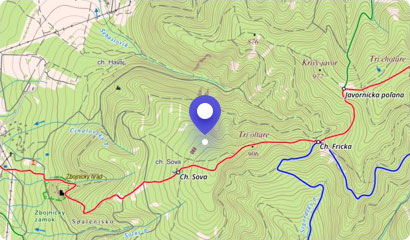
Tourist map (GPS 48.37559, 17.59299)
Google maps (Navigation)
Comments [0]
There are no comments. You can add comment or upload photos of this attraction.
Accommodation
Nearby things to do at Western Slovakia Museum
0.3 km
Synagogue - Center of Contemporary Art
Other attractions
If you ever come to Trnava, do not miss the tour of the synagogue that dominates the park in Halenárska Street. First and foremost, everyone will be impressed by the beau...
Trnava
0.4 km
Saint Nicolas' Church in Trnava
Sacral monuments
The city of Trnava is characterized by a charming and unmistakable atmosphere, completed by historical, sacral buildings. One of them is Saint Nicolas' Church, which was ...
Trnava
0.6 km
City tower in Trnava
Museums and history
The biggest landmark of the very heart of Trnava is the Town Tower built in the Renaissance style. The history of the City Tower dates back to 1574. The builder of this 6...
Trnava
0.6 km
Heroes Laser Arena
Adrenaline activities
If you want to try something new, a new type of entertainment, where you will have great fun and exercise at the same time, Laser Game is an ideal choice!
You're running...
Trnava
0.6 km
Cathedral of St John the Baptist
Sacral monuments
The city of Trnava could be compared to an exhibition hall of sacral buildings. The largest and most spectacular temple in Trnava is the two-towered Cathedral of St John ...
Trnava
0.8 km
Anton Bernolák Memorial in Trnava
Memorials
The sculptural group of the first codifier of standard Slovak language has been standing in Trnava since 1937, near the Bernolák Gate, in the so-called Bernolák's Orchard...
Trnava
0.8 km
Castiglione Swimming Pool
Lakes and pools
Sunrays, hot summer breeze, lots of fun and water can be enjoyed at the latest summer swimming pool called Castiglione, located in the largest housing estate in Trnava - ...
Trnava
0.9 km
Relax Aqua & Spa
Lakes and pools
RELAX AQUA & SPA is an aquapark in Trnava, where you can have fun and relax in every season. There are 4 swimming pools in the interior of the complex - relaxation, restf...
Trnava